Current Projects
Crimes of Solidarity
I am working with Free Humanitarians on an open access citizen science database of ‘crimes of solidarity’. That is, the criminalisation of acts such as offering food, shelter, or sea rescue to irregular migrants. We will be mapping the spread of these laws over time and developing a programme of work to explore and understand their meaning and impacts.
Find out more here
Postcolonial Historical Sociology
Understanding the implications, legacies, traces, or continuities of European colonialism for contemporary social life has become a growing area of interest in migration studies in recent years. Much of the methodological discussion that this ‘postcolonial turn’ has precipitated in migration studies has been focussed on the ethics of contemporary migration research methods, and on North-South power relations in the research process. While such discussions are deeply important, very little has been said about other methodological questions. This project focuses specifically on the question of doing historically informed research. How do we methodologically deal with vast temporal and spatial phenomena? How do we trace ideas over time? How do we map continuity and change? What is a legacy? Growing interest in postcolonial and decolonial migration research necessitates the development and uncovering of concepts and methodological tools for undertaking what might be termed postcolonial historical sociology. I have a book forthcoming with Bloomsbury ‘Postcolonial Historical Sociology: Theory, Method, Analysis’ on this theme.
The Business of Bordering
With Martin Lemberg-Pedersen and Joe Turner I have a new project starting in 2026, on the business of bordering in the UK and Denmark. This project focuses on the border security economy. That is, the wide range of companies, contracted directly or indirectly by governments, to contribute to border control. This includes the provision of technologies such as IT platforms, scanners, watchtowers and drones; infrastructure such as detention and holding facilities; and services such as private security, escorting, and consultancy. The project will use rigorous academic research to inform public debate on the realities of this growing border security economy and what it means for domestic and international politics, human rights and democracy. With the aim of increasing accountability we will work with civil society stakeholders (Danwatch and CorporateWatch) to share findings with non-academic audiences via a variety of general and targeted knowledge exchange activities. This £713,000 project is funded by the ESRC.
Past Projects
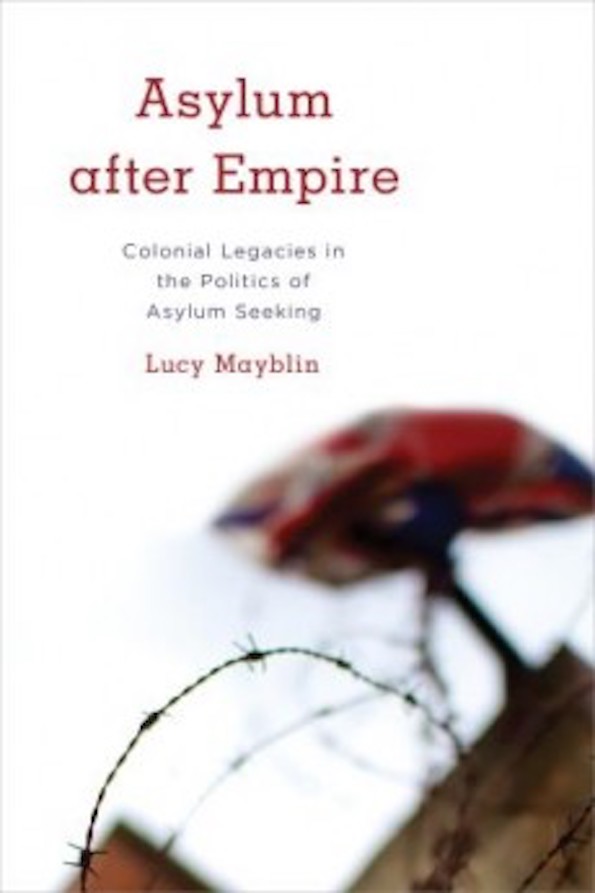
Asylum After Empire was my doctoral project (supervised by Gurminder K Bhambra). Published as a monograph in 2017, the project explores how hostility to people seeking asylum in contemporary Britain can be understood in the context of colonial histories, particularly ideas of differential humanity. I passed my PhD without corrections and Asylum After Empire (Rowman and Littlefield International, 2018) was awarded the Philip Abrams Memorial Prize for the best first monograph by the BSA in 2018.
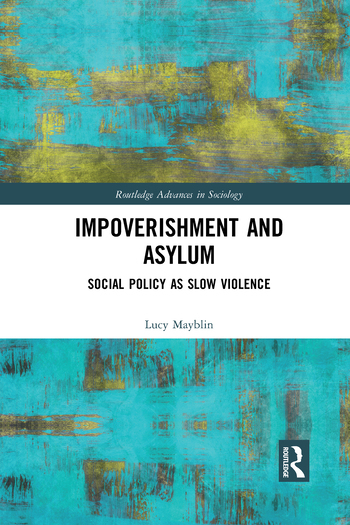
Asylum. Welfare Work was a project funded via the ESRC Future Research Leaders sheme. It ran 2015-2019 and explored three aspects of asylum, welfare, and work in the UK. First, how politicians and policymakers imagine asylum seeking, and how this in turn shapes policy, irrespective of research evidence. Second, the impacts of the policy on third sector organisations, including costing the financial burden of supporting people who should be supported by the state. Third, the impacts of the policies on people awaiting a decision on their asylum applications. There were a number of publications and outputs from the project, including the monograph ‘Impoverishment and Asylum: Social Policy as Slow Violence’ (Routledge, 2019).

Channel Crossings was a programme of work on UK government responses to irregular (small boat) Channel crossings. I worked with Joe Turner, Tesfalem Yemane, Thom Davies and Arshad Isakjee on this project. This project was funded by an ESRC research grant (£585,000) 2022-2025, it involved a collaboration with the Refugee Council and JCWI, and delivered a range of publications and impact activities.
 Dr. Lucy Mayblin